
Journal · Space · Myungri
My Cosmic Turning Point
A moment that changed how I read space
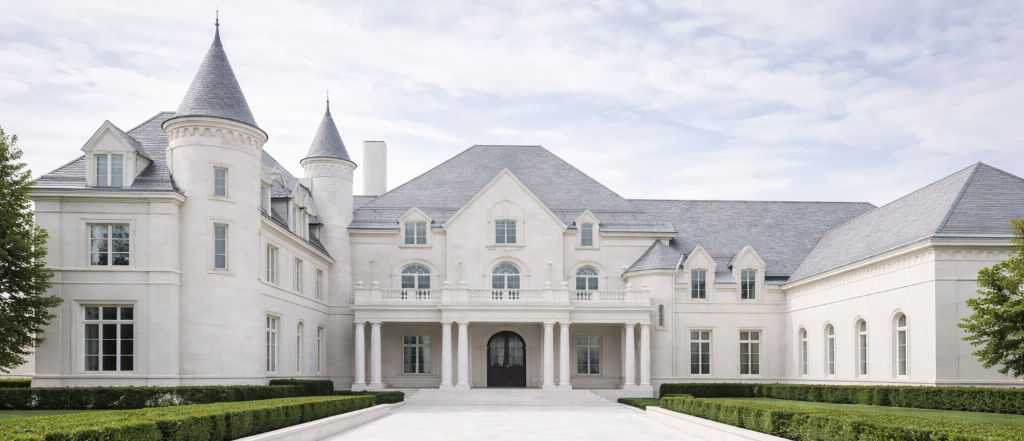
After leaving behind my career in commercial design in Korea, I followed my husband to the United States. After completing my studies once again, I placed a small classified advertisement in a Korean community newspaper. The very first client who contacted me turned out—of all things—to be for a residential project, an area I had quietly hesitated to take on because I had never done it before.
The moment I stepped out in front of the house, I was stunned. It was a mansion of nearly 8,000 square feet. In my mind, if I were to begin working on residential interiors, I had imagined starting with a house of around 2,000 to 3,000 square feet, gradually building experience. From the outside, the home resembled a small castle, with white stone and stucco blending into a fairytale-like façade. Inside, however, my anxiety only deepened.
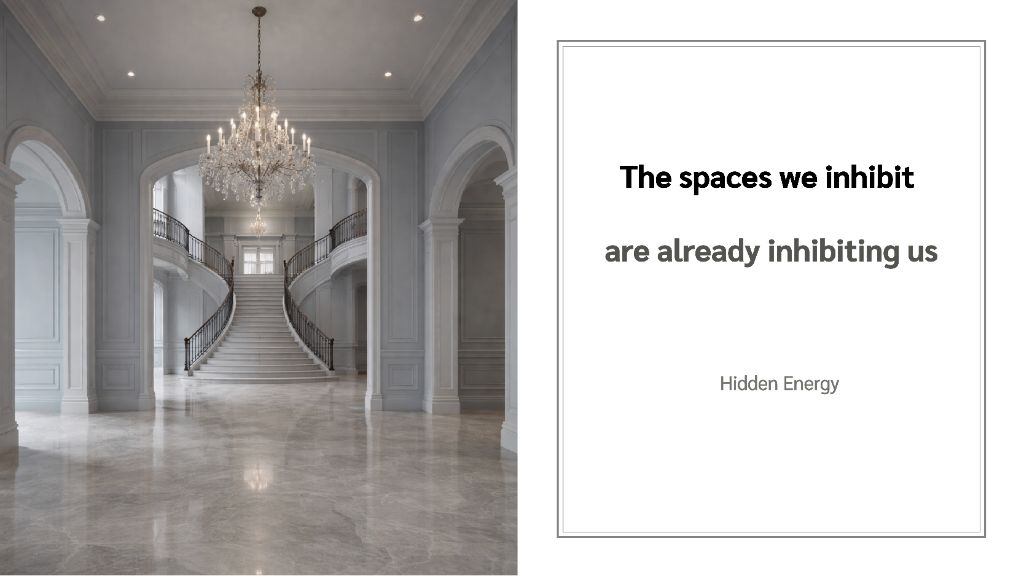
The house was vast—and mostly empty. On the first floor alone, there were two formal living rooms, along with an enormous family room, kitchen, study, and entertainment space. Upstairs, the master bedroom was accompanied by an expansive master bathroom, additional bathrooms, a dressing room, and several en-suite bedrooms stretching down a long corridor. The sheer scale of it all felt overwhelming, as if the house itself were pressing down on me, asking, "Do you really think you can do this?"
Suppressing my nerves, I met with the client. Perhaps thanks to years of accumulated experience, I managed to complete the initial consultation without much difficulty. With little expectation, I sent a rough estimate a few days later. About three weeks after that, I received an unexpected message: they wanted to proceed with the contract. Rather than feeling accomplished, the thought that crossed my mind was, "If only I had practiced something like this just once beforehand."
When we met again, the client, a married couple, signed the contract and, just as we were about to discuss the design concept, handed me two books. "Please review these carefully and reflect them properly in our home's design," the wife said. "You can recommend the design direction. Just show us the key reference images first."
Curious about these books—which seemed far more important than the design concept itself—I hurried back to my office and began reading. Inside were ideas I had heard in passing since childhood through adult conversations: concepts about the energy of space and objects, organized into a coherent system. The content was based on Myungri theory and spatial energy alignment. To be honest, until then, I had regarded such ideas as something close to superstition—unverified beliefs people simply passed along.
I was first surprised to learn that there were people who truly believed in and practiced these ideas. Then I was surprised again by the depth of the theory itself. It was anything but simplistic.
Although the project involved no major construction, it unfolded over approximately twelve months. By analyzing the energy flow of each family member, restructuring spatial layouts and circulation based on those relationships, and prioritizing balance over decoration, the home was completed as a French-style residence centered on harmony.
That process included trial and error, and moments of uncertainty. Yet it felt as though an entirely new layer of perception had opened within me—like the awakening of a sense I hadn't known how to use before. I became deeply absorbed in the work, and fortunately, the client was equally fascinated by how the theories from the books were translated into physical space.
They shared that after immigrating to the United States, their early years had been difficult. But after moving into a particular home, their lives began to improve noticeably. The change was clear enough for the entire family to feel. While searching for the reason behind this shift, they encountered Myungri theory. They tried applying energy balance to their living space with a specialist, but aligning it with design proved challenging. As their business expanded and they moved into a larger home, they realized they truly needed professional help—eventually leading them to me.
Spaces designed with energy balance in mind do not look dramatically different from conventional interiors. Yet the responses from those who live in them are distinct. At first, people often say, "It feels comfortable," or "It feels stable." Over time, patterns emerge. Friends naturally gather in these homes. Family members who once stayed out late begin returning earlier. Shared dinners become more frequent.
Some clients remain in the same home for nearly twenty years, choosing only to refresh the energy balance once every few years rather than move. More importantly, many of them share a common trait: they are individuals who have established themselves firmly and achieved stability in their respective fields. They rarely speak openly about these ideas, but in private, they clearly recognize the importance of energy balance.
In the West, too, there are scholars who explore the connection between cosmic forces and human life. Some have even pointed out parallels between Myungri theory and quantum mechanics. However, examples that connect these perspectives to everyday living spaces in concrete, practical ways remain surprisingly rare.
Since that day, my study of Myungri has continued. That time was not merely about learning, but about a shift in perception itself—what Eastern traditions often describe as the opening of the third eye. I came to realize that spiritual spatial design requires not only seeing, but also reading—and that difference reshaped my attitude toward my work over time, more than I ever expected.