Design · Space
The Architecture of Silence
Why We Are Hiding Our Kitchens
May 24, 2026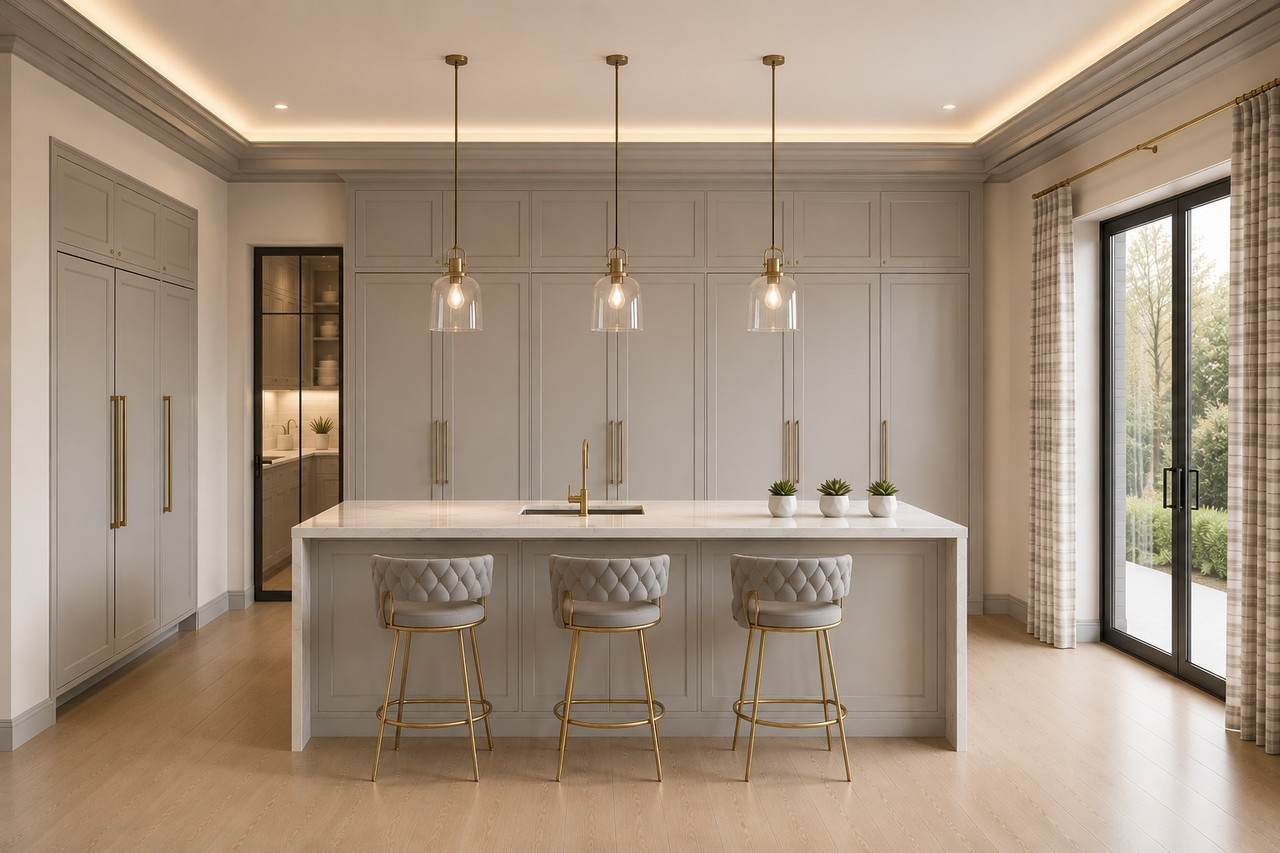
Homes today have steadily evolved toward more open layouts. The kitchen is no longer a space hidden behind walls, but a central landscape connected naturally to the living room. We sought openness and seamless flow for gathering, expecting the kitchen to function as an integrated part of our visual environment.
Yet in everyday life, the reality of an open floor plan is often far more exhausting than expected.
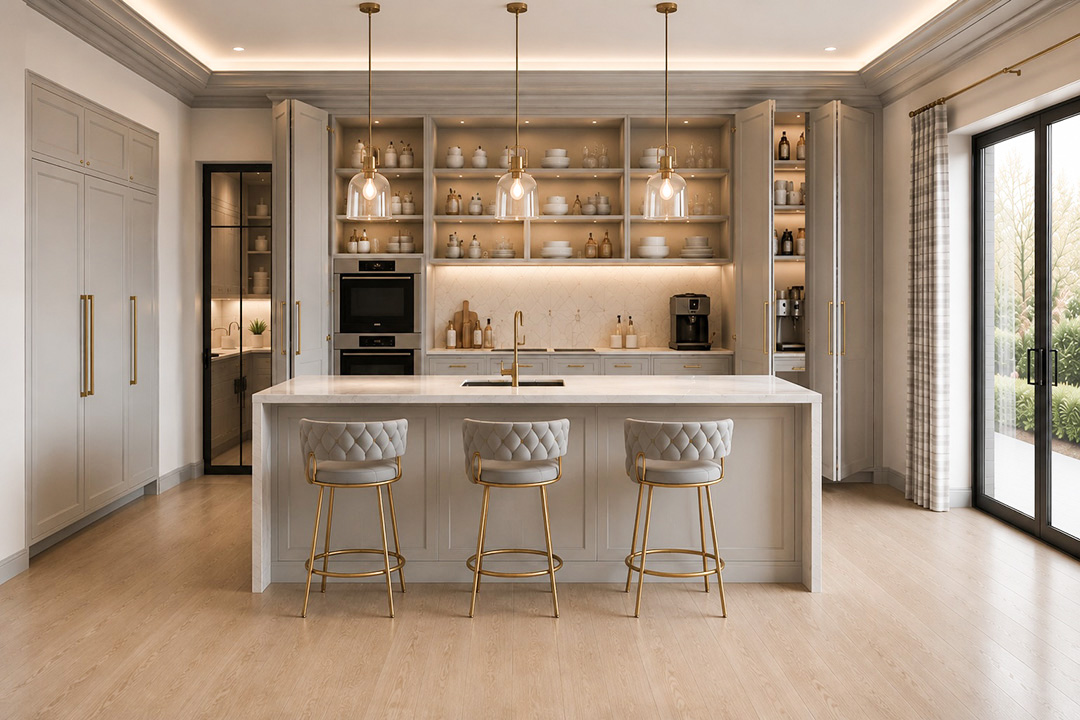
Dishes left after meals, cooking tools in use, and small appliances remain constantly visible from the sofa. Maintaining a perfectly organized kitchen every single day is unrealistic. This visual complexity silently disrupts the atmosphere of the entire space. When the boundaries of labor and rest blur, the mind finds no place to settle.
This is precisely why the concept of the "Hidden Kitchen" has rapidly gained attention. It is a thoughtful architectural response to our need for sensory relief, concealing the functional friction of daily life behind a canvas of silence.
The Precision Behind the Serenity
Achieving this fluid transformation requires quiet precision. Large doors must retract smoothly into side cavities, a feat made possible by advanced pocket door systems like Blum REVEGO or Hawa Concepta, engineered to support heavy panels without instability.
It also demands a structural sacrifice. While standard cabinets are 24 inches deep, a hidden kitchen requires 27 to 28 inches of depth to accommodate the pocket cavities so doors can close completely without interfering with the tools within.
In larger architectures, this concept evolves into an elegant dual-zone layout:
- The Show Kitchen (70%): Dedicated to gathering, featuring stone islands, hidden ventilation, and integrated wine coolers.
- The Back Kitchen (30%): The concealed core that houses the main range, deep sink, and dishwasher, keeping heavy cooking entirely out of sight.
Connected through doors finished in the same material as the surrounding millwork, the heavy workspace disappears entirely into the architecture.
The evolution of this design concept is also deeply intertwined with the ongoing integration of advanced smart home technologies.
A Healthier Space for the Mind and Body
However, this containment is never purely aesthetic; it requires a deep understanding of environmental health. Airborne particles and pollutants generated during high-heat cooking can create serious respiratory concerns if compressed into an inadequate volume of space.
Therefore, the value of a hidden kitchen is only fully realized when proper spatial volume and a high-quality ventilation system are planned together from the very beginning.
To achieve this level of sophistication, the hand of precision millwork must be absolute. The spacing between cabinet doors must remain consistently aligned at a razor-thin 3 millimeters, ensuring every line reads as one continuous architectural surface. By eliminating protruding hardware in favor of push systems and integrated J-pull profiles, we remove the visual clutter that triggers our subconscious mind to sense labor.
The Psychology of Environmental Flow
Modern life exposes us to constant visual stimulation throughout the day. As a result, we instinctively seek quieter, more controlled environments within our homes. This is a natural human response to stabilize sensory fatigue caused by excessive visual expansion — a core truth within Environmental Psychology.
In the study of spatial energies, environments that suffer from excessive visual noise are particularly challenging for individuals whose inner constitution carries a strong Fire energy. Visually overstimulating spaces aggravate this expanding energy, leading to restlessness. Conversely, structured environments with controlled lines and organized visual order act as a cooling anchor, stabilizing the energy flow and restoring a sense of calm composure.
Ultimately, we no longer desire openness alone. We seek an open space that still feels composed and controlled. We look for environments that stabilize the eye, organize emotional flow, and create psychological clarity. The hidden kitchen has become one of the clearest expressions of that shift — a deliberate choice to bring quietude back into the spaces where we live.