
How-To · Sustainability
Net-Zero Homes 2026: Designing for Autonomy and Economic Resilience
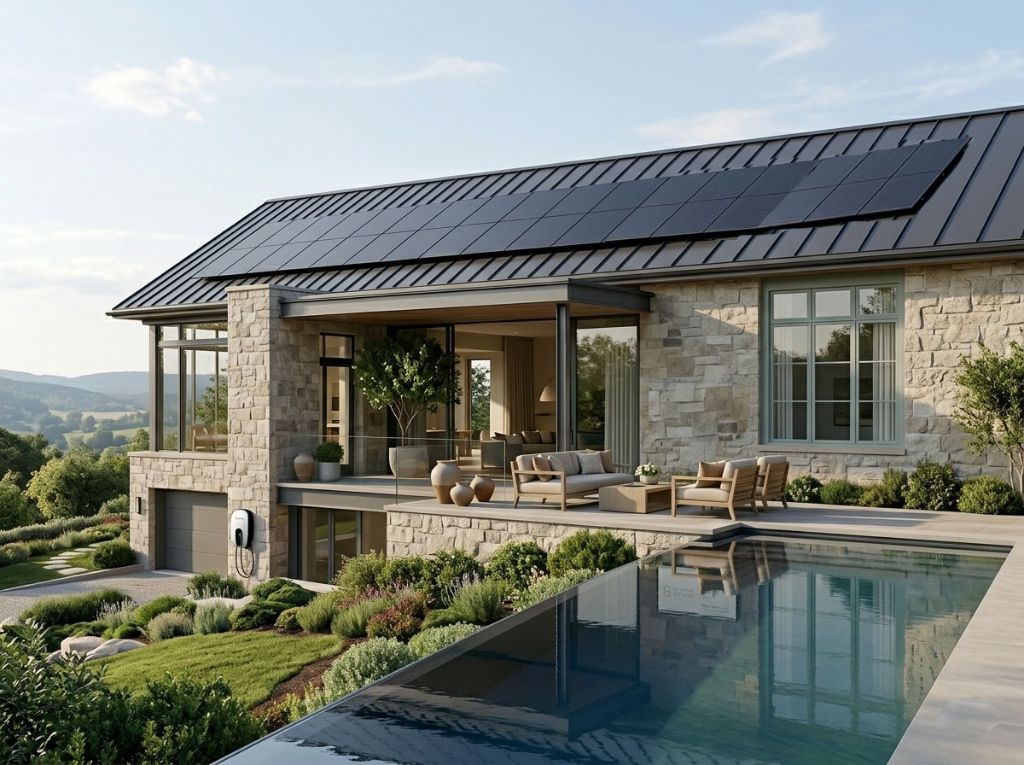
In a landscape defined by rising utility costs and increasing grid instability across the United States, the concept of a "Net-Zero Home" has matured. It is no longer merely an environmental statement; it is a sophisticated strategy for asset protection. The modern goal has shifted from contributing back to a centralized grid to achieving true Energy Sovereignty—ensuring a home can sustain itself independently while protecting its long-term financial value.
1. The Shift to Strategic Self-Consumption
As utility companies nationwide transition away from favorable net-metering policies, the economic incentive to export excess solar power has diminished. The new priority is Self-Consumption Optimization. By integrating high-capacity Battery Energy Storage Systems (BESS), homes can capture solar energy during the day for use during high-cost peak hours. This move from an "income-generating" model to a "cost-avoidance" model is the only reliable way to secure a return on investment in the current regulatory environment.
2. Prioritizing the Building Envelope
A resilient net-zero strategy begins with the structure itself, not the equipment. Before adding solar arrays, focus must be placed on the Thermal Envelope. High-performance insulation, airtight construction, and triple-pane glazing create a "passive" barrier that maintains internal temperatures regardless of external weather extremes. By reducing the overall thermal load, a home requires significantly less mechanical energy, ensuring permanent operational savings that technology alone cannot provide.
3. Electrification and Intelligent Load Management
Full electrification—transitioning to high-efficiency heat pumps and induction systems—is the standard for future-proof housing. However, the true innovation lies in Smart Load Shaping. Modern systems automatically synchronize energy-intensive tasks, such as EV charging or water heating, with peak solar production. This automated demand management ensures the home operates on its own "free" power, effectively insulating the homeowner from the volatility of the national energy market.
4. Resilience through Islanding Capabilities
With extreme weather events becoming more frequent across the country, a home's "recovery" speed is a critical value metric. Net-zero homes equipped with smart microgrids offer "Island Mode" functionality, allowing the property to operate independently during large-scale grid outages. This autonomy ensures that critical life-safety systems and climate controls remain functional, providing a level of security that is now a mandatory requirement for high-value real estate.
5. Performance Data as Market Currency
In 2026, a home's efficiency is no longer a matter of opinion; it is a matter of record. Sophisticated buyers now demand verified performance data. Properties that can provide a transparent history of energy independence and low operational overhead command a significant market premium. Providing a digital "Performance Passport" that proves a home's self-sufficiency is the most effective way to validate its worth, turning efficiency into a tangible, tradable asset.
The net-zero home of 2026 is not defined by its solar panels alone—it is defined by the intelligence of its systems and the resilience of its design. True energy sovereignty is achieved not by generating more, but by consuming smarter, building tighter, and proving performance with data.